Linggo, Oktubre 8, 2017

A Legend from United – Kingdom – The Loch Ness Monster
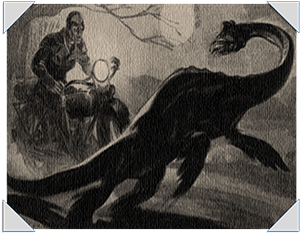
United – Kingdom – The Loch Ness Monster

United-Kingdom - Loch Ness MonsterThe Loch Ness Monster, or Nessie, as it has been nicknamed, is among the most well-known urban legends of modern times and it is among the greatest points of interest for cryptozoologists – scientists who study animals that have not been proven to exist.
The first documented sighting of Nessie was in the year 565 when Saint Columba saved a swimmer from becoming its dinner. For nearly 1500 years following, the Loch Ness Monster had appeared in stories, but it is unknown which ones were eyewitness accounts and which ones were invented solely for entertainment purposes. Legends of the monster lived on as they were passed from generation to generation, but the creature’s popularity reached an unprecedented height in 1933. That year, a new road was constructed beside the loch. Travelers reported more sightings than ever before. Later that year the infamous Surgeon’s Photo was published, depicting what appeared to be a head and long neck stretching out of the loch water. In 1994, one of the individuals who shot the Surgeon’s Photo confessed on his deathbed that the photo was a hoax. While some people had their hopes crushed, the succeeding evidence was still not invalidated. Though what was thought to be the best evidence was proven false, the other pieces of evidence kept the monster alive in the minds of many. Today there are stories of similar lake monsters in Lake Champlain, Lake Michigan, Iceland, and elsewhere.

A Legend from Norway – Selma

Norway – Selma

Norway - SelmaClose to Telemark, Norway, is a Lake called Seljordsvatnet. It is twelve miles long and one and a half miles wide.Like Loch Ness is was formed by glaciers during the last ice age. There have been reports of a large creature living in the lake since the 1750’s.Eyewitness reports, generally describe the creature, dubbed Selma by the locals, as a 30 to 45 foot serpent like creature.
A documented account of an encounter with the creature dates back to 1880 when Bjorn Bjorge, and his mother Gunhild, were said to have cut a creature that attacked them in half. According to the document the lower portion of the creature squirmed back into the lake while the front half was left to rot on the shore.
In the summer of 1918, Karl Karlsson walked down to the bridge at Sandnes to fish.Suddenly he saw an animal in the water. It came very close ,moving very fast and Karl Karlsson became frightened and ran away ,leaving his fishing rod.. He described the head of the animal as being like a horse. It held it’s head about three feet out of the water and then it stopped, sank straight down and disappeared.
Two years later, Eivind Fjodstuft went out to fish. When he came to the point he saw an animal on its way out of the lake.It turned back when Eivind came towards it and slipped down into the water.He described the animal as 15-20 meters long, with a head resembling the head of a crocodile. The animal was black in color and had finlike feet at the front part, right below its neck. He saw no eyes or mouth, but the animal turned its head from side to side and seemed to scout and listen. It quickly went back into the water again. In 1996, two men were fishing around dusk on Lake Seljordsvatnet when there was a sudden commotion in the water. A horse like head attached to a ten foot long neck rose from the water, the creature starred at the two fisherman from about 8 inches away before slowly submerging .In in July, 2001, an unnamed father and son from Oslo,were taking a walk down to the lake to go swimming. They were about 100 yards away when they noticed something strange on the beach. The two stopped about 30 feet from the beach as they witnessed what they could only describe as a giant snake just at the waters edge.The animal held its head towards the water unaware of their presence but as they watched the son stumbled, making a noise, and the beast turned its long neck around and stared at directly at them They described the creature’s head as like a calf. The beast swung its head back towards the lake and glided into the lake. The two described it as having an enormous body, which was at least 30 feet long, and was as thick as a car tyre.

A Legend from Sweden – Sigurd

Sweden – Sigurd

Sweden - SigurdSigurd was a member of the royal family of Denmark and a descendant of the god Odin. He was raised by a blacksmith named Regin, who made him a special sword from pieces of a sword owned by Sigurd’s father.
Sigurd used his sword to kill the dragon Fafnir and so acquire its golden treasure. When Sigurd roasted and ate the beast’s heart, he was able to understand the language of the birds around him. They warned him that Regin was going to betray him, so Sigurd beheaded the blacksmith. Sigurd took the treasure and put a ring on his finger. He was unaware that the ring bore a curse, which brought misfortune to its wearer.
After slaying Fafnir, Sigurd came upon a castle where he awakened the warrior maiden Brunhilde, whom Odin had cast into a deep sleep. Sigurd gave his ring to Brunhilde and promised to return to marry her. But during his journey Sigurd was given a magic drink that made him forget Brunhilde, and he married the princess Gudrun instead.

A Legend from Finland – Ukko

Finland – Ukko

Finlande - UkkoUkko possessed a weapon, often a hammer called Ukonvasara, sometimes also an axe or a sword, by which he struck lightning.
Thunderstorms were sometimes interpreted as result of Ukko copulating with his wife Akka. He also was believed to cause thunderstorms by driving his chariot through the skies.
A viper with a serrated line on its back was considered a symbol of thunder.
There is evidence that the rowan tree was held sacred to Ukko. Rauni, a vaguely defined being has been hypothesised to be cognate to Germanic words for the rowan tree.
The ladybird was also considered sacred to Ukko and called ukonlehmä

A Legend from Denmark – King Dan

Denmark – King Dan

Denmark - King DanThe story is told that, in olden days, there were three brothers: Dan, Nor and Østen. They were the sons of King Ypper, who lived in Uppsala in Sweden, which was named for him.
The brothers went their separate ways, settling each in a different country. Dan went to Denmark, Nor to Norway, and Østen stayed in Sweden, in the countries to the East.
At that time, the realm of Denmark did not yet exist. Dan ruled only over the island of Zealand and the lesser isles. Jutland, Funen and Scania were each separate kingdoms. The Jutes were, at that time, at war with the German king. They built up earthworks and a palisade along their southern border, in that place where Queen Thyra later caused Dannevirke to be built. They named this wall Kovirke. But, when the German king came with a mighty host, they sent messengers to King Dan asking for his help.
Dan went to war with the Germans, and a great battle was fought before the wall. Most of the enemy fell, “biting the grass”, as the saying goes, and the rest fled. When the Jutes saw how brave King Dan was, they led him to their thing-place, and placed him upon a great stone, proclaiming him their king. This stone was since called Daneryge (ryge being a Jutish word for “large stone”), and it was there, later, that Danish kings were acclaimed. Daneryge was to be found on the the thing-place outside Viborg, and the entire place has also been called Danerlyngen.
When the people of Funen and Scania heard of this, they also elected Dan their king. Dan now summoned the best men in all the realm, and he said to them: “This land is fair and fertile, yet it has one flaw: it lacks for a name.”
They answered him: “You are Dan, and therefore the realm shall be called Danmark, and this name shall last for so long as the world lasts.”
King Dan built himself a royal palace at Lejre near Roskilde Fjord. He was called Dan the Grand or the Mighty, because no man before him had had such a great domain. After his death, the Danes built a barrow. They placed him in the tomb chamber fully armed and arrayed for war, mounted on his horse. Then they cast earth upon the tomb, making a mighty burial mound.

A Legend from The Netherlands – Flying Dutchman

The Netherlands – Flying Dutchman

Netherlands - Flying DutchmanIn 1795, sailors told a story of a Dutch ship that got lost at sea during a horrendous storm. The same ship later wrecked other ships in bouts of ghastly fog. This was the result of captain Bernard Fokke’s behaviour: he was known for the “devilish” speed on his trips from Holland to Java. Some said that Fokke was aided by the Devil…
Another version of the legend starts in 1641 when a Dutch ship sank off the coast of the Cape of Good Hope. The trip to the Far East had been successful and the ship was on its way back home to Holland, so captain Van der Decken was pleased… and failed to notice the dark clouds looming. Only when he heard the lookout scream in terror, he did realise they sailed straight into a heavy storm. Van der Decken and his crew battled for hours to get out of the storm, but then they heard a sickening crunch: the ship had hit a rock and began to sink. As the ship plunged downwards and the captain knew death was approaching, he screamed out a curse: “I will round this Cape even if I have to keep sailing until Doomsday!”
Misfortune, greed, and fidelity collide in this storm-battered tale of one man’s quest for life-saving love. Wagner retells the legend of the fearsome Flying Dutchman, cursed to sail the seas until he finds a woman who will love him until death, in his famous opera…

A Legend from Belgium – Manneken Pis

Belgium – Manneken Pis

Belgium - MannekenpisThere are several legends behind this statue :
In 1142, the troops of this two-year-old lord were battling against the troops of the Berthouts, the lords of Grimbergen, in Ransbeke (now Neder-Over-Heembeek). The troops put the infant lord in a basket and hung the basket in a tree to encourage them. From there, the boy urinated on the troops of the Berthouts, who eventually lost the battle.
Another legend states that in the 14th century, Brussels was under siege by a foreign power. The city had held its ground for some time, so the attackers conceived of a plan to place explosive charges at the city walls. A little boy named Julianske happened to be spying on them as they were preparing. He urinated on the burning fuse and thus saved the city.
Another story tells of a wealthy merchant who, during a visit to the city with his family, had his beloved young son go missing. The merchant hastily formed a search party that scoured all corners of the city until the boy was found happily urinating in a small garden. The merchant, as a gift of gratitude to the locals who helped out during the search, had the fountain built.
Another legend was that a small boy went missing from his mother when shopping in the centre of the city. The woman, panic-stricken by the loss of her child, called upon everyone she came across, including the mayor of the city. A city-wide search began and when at last the child was found, he was urinating on the corner of a small street. The story was passed down over time and the statue erected as a tribute to the well-known fable.
Another legend tells of the young boy who was awoken by a fire and was able to put out the fire with his urine, in the end this helped stop the king’s castle from burning down.

Quotes About Happiness

Quotes About Happiness “Don't cry because it's over, smile because it happened.” ―  Dr. Seuss “Love is that conditi...